


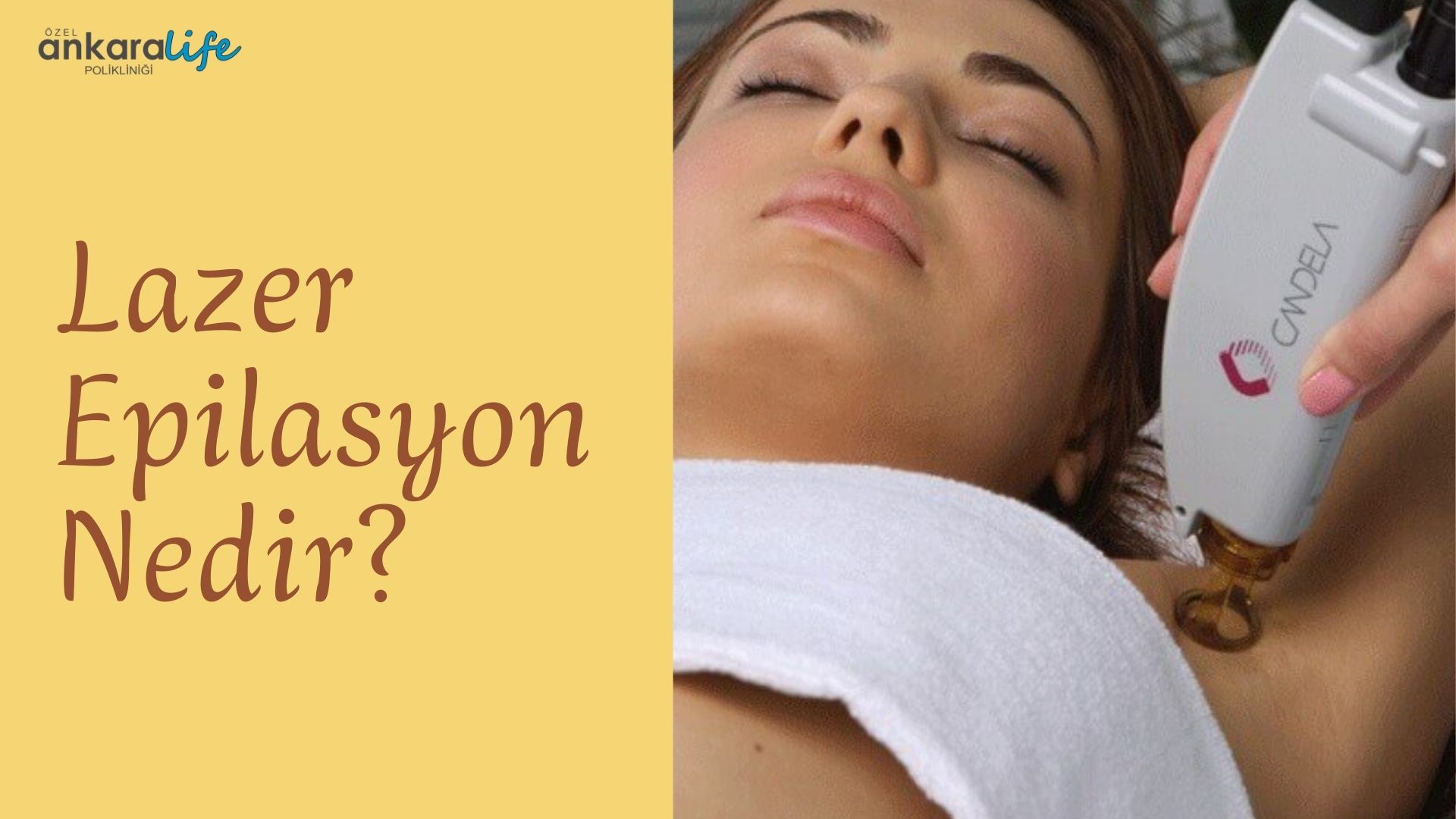

Laser hair removal is one of the most frequently applied cosmetic medical procedures. Alexandrite laser (755 nm), Diode laser (808-810 nm), and neodymium-doped yttrium aluminum garnet (Nd:YAG; 1064 nm) laser are widely used and effective devices for hair reduction. All of these devices work on the principle of selective photothermolysis. The optimal wavelength, energy and pulse duration should be selected to achieve the best clinical outcome with the least adverse effects. For this reason, all these parameters must be chosen correctly for each patient, each session and for each different body region. In experienced hands, the results are satisfactory. Multi-centre, prospective, double-blind and control studies are needed to evaluate the long-term results of laser epilation and to determine treatment options in difficult patients.
KEYWORDS: Lasers; Hair removal ( removal ) ; review
ABSTRACT
Laser depilation is one of the most commonly used cosmetic medical procedures. The Alexandrite laser (755 nm), Diode laser (808-810nm) and neodymium-doped yttrium aluminum garnet (Nd:YAG; 1064 nm) are the widespread, effective lasers for hair reduction. Those devices run on the principle of selective photothermolysis. Appropriate wavelength, energy and shot should be selected in order to get best outcome with minimum side effect, therefore these parameters should be set up for each body region in each session of each patient. Outcomes are satisfactory if the procedure is performed by experienced professionals. Multi-center, prospective, controlled and double blinded studies are required in order to examine long-term results of laser epilation and determine therapy options for challenging cases.
KEY WORDS : Lasers; Hair Removal; review;
Laser hair removal procedures; Since getting the approval of permanent hair reduction from the Food and Drug Administration (FDA) in 1996, it has increased rapidly and has become one of the most frequently applied cosmetic procedures today.
Laser hair removal is also widely used in Turkey. While one of the causes of prevalence is hirsutism and hypertrichosis; Another reason is the perception that individuals with bushy hair and hairless bodies are “worthy of being admired” due to social prejudices and media figures, and as a result of this perception, women/men want their body hair to disappear even if there is no increased amount of hair. As a result, it would not be wrong to say that laser hair removal is an application that concerns the entire population.
OVERVIEW
The basic principle in laser epilation applications is selective photothermolysis (1). With this mechanism, it is aimed that the light energy is converted into heat after being absorbed by the target chromophore, melanin, and this heat damages the hair stem cells in the surrounding tissue. Hair stem cells that are tried to be destroyed; They are non-pigmented cells located in the deep part of the hair follicle and in the outer root sheath close to the erector pili protrusion. These stem cells enable the hair shaft to be produced.
In animal experiments, while pigmented hair follicles were sensitive to laser light in the anagen phase, they were found to be resistant in the catagen and telogen phases (2). However, it has been determined that the efficiency of laser epilation in humans is not always under the influence of the hair growth cycle and the melanin content of the hair. However, since the amount of melanin they contain is different, it can be seen in practical applications that while some hair follicles are permanently damaged at the end of the same session, some are less affected. In addition, it has been shown that damage to the vascular structure in the peribulbar area by the effect of heat during laser epilation also plays a role in hair removal (4).
In another study, after histopathological and immunohistochemical examinations performed after laser application, it was found that the hair shaft was destroyed by thermal heat, but the immunohistochemical structure of the hair follicle generally remained the same. For this reason, it has been suggested that laser systems may act not by destroying hair stem cells, but by causing changes in their functions (4). Further studies are needed to understand the exact mechanism of laser epilation.
Parameters that can be changed during laser epilation application;
1) Wavelength
It would not be wrong to say that wavelength is the most important changeable parameter in laser epilation. The wavelength determines the depth of the laser device, the melanin selectivity, and the devices are named according to their wavelengths. As the wavelength increases, the depth of penetration of the laser beam increases. Today, Ruby laser (694 nm), Alexandrite laser(755nm), Diode laser (808-810nm) and neodymium-doped yttrium aluminum garnet (Nd:YAG; 1,064 nm) laser are used for laser hair removal.
Ruby laser is the laser with the highest melanin selectivity and is also the first laser used for hair removal.
However, its penetration into the skin is only about 2 mm, which is not sufficient to affect the hair follicle in many parts of the body (5). In addition, the high melanin selectivity of the Ruby laser increases the possibility of epidermis damage (6). For this reason, the Ruby laser is no longer used in epilation. In terms of melanin selectivity, Alexandrite, Diode and Nd: yag lasers come after Ruby laser (6,7) .
There are laser devices produced by many different brands in these wavelengths. Although there are studies comparing the effectiveness of devices at different wavelengths in the literature, unfortunately the results of the studies contradict each other. The experience of our clinic is that Alexandrite (755nm) laser is more effective in suitable patients, but Diode (808-810nm) and Nd:YAG (1064nm) lasers are safer in patients with skin type 3-4 and/or tan.
2) Energy
Energy is the definition of the current power sent from the laser device to a certain tissue area in each shot, in J/cm2. The increase in energy is directly proportional to the efficiency (8,9). Unfortunately, as the energy given to the tissue increases, the possibility of side effects also increases. In order to achieve the best epilation result, the highest dose that will not cause damage to the epidermis should be given. Device manufacturers have recommended dosages for each device for beginners. However, the application doses may be different for each patient, for each session, for each different body area, and the treatment can always be individualized. Perifollicular erythema and edema during administration can be taken as criteria for determining the effective dose. (7) .
3) Pulse Duration
Pulse time is the exposure time to laser light. It is measured in milliseconds (ms) in epilation devices. (6) . In many devices, the exposure time of the beam can be adjusted. In order to protect the epidermis in patients with tan and dark skin, it is recommended to extend the pulse duration in devices with adjustable pulse duration. The estimated thermal relaxation time for human terminal hair is 3 ms -300 milliseconds, so laser devices used in epilation have pulse durations ranging from 3 ms to 300 ms (10,11).
4) Head Size
The head size is the diameter of the cross-section of the laser light beam, and this diameter determines the intensity of the applied energy. When the laser beam is sent to the skin; Some of the rays are reflected from the skin, some of them pass through the tissue and disperse, the rest is absorbed by the tissue and turns into heat energy. As the head size increases, the depth to which the laser beam will reach, the amount of energy that will be absorbed by the tissue and converted into heat, therefore, the efficiency increases (6,7,12,13). Nouri et al. In a double-blind, randomized study with the long-pulsed Alexadrite laser, they applied epilation to one of the armpits with the exact same procedure, except using a head size of 12 and 18 mm for the other, and found 10% more hair reduction in the armpit using a 18-gauge head compared to the other (12).
In addition, the increase in the size of the nozzle ensures that more areas are affected with each shot, making the application easier and faster.
5) Cooling
In laser epilation applications, although the target is melanin in the hair, the melanin in the epidermis during beating also traps these rays and converts them into heat. For this reason, it is possible for the epidermis to be damaged by heat, especially in dark-skinned individuals and especially when high energy is used. Cooling the epidermis during the procedure allows the hair shaft located deeper to be affected without damaging this area (14). For this cooling, devices that blow contact cooling, cryogen gas, cold air can be used before or during the process. Protecting the epidermis with active cooling systems during laser treatments reduces the risk of side effects, and as the patient will feel less pain, it provides the high doses required for effectiveness.
6) Post-Application Care
Perifollicular erythema and edema are expected to develop after laser application. This edema and erythema regress spontaneously within minutes to a few days. The regression period is generally shorter in women than in men (15). This difference may be due to the difference in average hair diameter between the sexes. In practice, patient comfort can be increased by reducing this time with ice application and topical steroids. The importance of sun protection during this period of inflammation should also be explained to the patients.
Parameters that cannot be changed during laser epilation application;
The main parameter that cannot be changed during laser epilation application is patient characteristics. The most successful result in laser epilation is obtained with the ideal patient. Ideal patient; The patient is white skinned, not tanned, has black and thick hair, does not have hormonal disorders, is over 35 years old and has realistic expectations from laser epilation.
In patients with skin type 3-4 or tan, there is intense melanin in the epidermis, effective laser doses may not be reached due to the risk of burns, which makes it difficult to obtain results. In tanned patients, waiting for the skin color to lighten and/or giving a lightening treatment may increase the effectiveness.
Since laser epilation targets the melanin in the hair follicle, the effect rate is low in patients who do not have enough melanin in this area. It should be explained to the patient that no results will be obtained in patients with white hair. Although there are publications stating that it has achieved results in red and blond hairs, the general opinion is that very successful results are not obtained in this group (7). Unfortunately, the experience of our clinic is also in this direction.
APPROACH TO DIFFICULT PATIENTS
It is very difficult to review the studies on the effectiveness of the treatment and increase the efficiency in laser epilation and to reach a conclusion with this observation. Many of the studies were not randomized, some did not include a control group, they were studied on different body parts, different hair reduction/removal techniques were used before laser treatment, the head size, pulse duration and energy were different, the number of sessions and intervals varied, the follow-up period after the end of laser treatment was quite different among the researchers. is different. All these reasons make it almost impossible to draw a map under the guidance of past studies.
Hormonal Disorder: Although there is a general opinion that laser epilation is less successful in hirsut women with hormonal disorders, studies have shown that laser epilation can be effective in reducing anxiety and depression in this patient group, and that the result satisfaction of the patients increases as the number of sessions increases (9,16). In this patient group, simultaneous laser application can be planned with medical treatment.
Light/white hair: The reason for the ineffectiveness of laser epilation devices is the insufficient amount of melanin in these hairs. In a study in which melanin-containing liposomal capsules called Lipoxome were used topically to enrich the region with melanin with melanin solutions, a statistically significant difference was found between the areas where melanin was applied and the areas where melanin was not applied, but when the additional effort and cost in the application were considered, the result was considered disappointing (17)
Photodynamic therapy was tried in order to increase the light sensitivity of the area containing white hair; After closure with 5 ALA (amino levulinic acid) for 3 hours, an argon-pumped dye laser at 630 nm wavelength was shot with 200 j/cm2. There was 40% hair loss 6 months after a single session (18). The disadvantages of the study are that it consisted of only 12 patients and did not include a control group. In addition to this high success rate, it should be noted that this type of treatment carries a risk of painful, epidermal damage and postinflammatory hyperpigmentation (19).
Dark skin colour: Type 4-5 patients or tanned patients are at higher risk for burns and pigmentation disorders as a result of epidermal melanin holding the laser energy during laser epilation (20). In addition, theoretically, keeping the energy more in the epidermis may cause less energy to reach the hair follicle, which is the main target (20). In this patient group, low energy, long pulse times and good epidermal cooling will reduce side effects and increase efficiency. The FDA-approved lasers for dark skin tones are Diode and Nd:YAG lasers (21). When the two lasers are evaluated among themselves, Nd-YAG is better in terms of side effect profile, while Diode laser may be more effective due to its short wavelength (20,22,23). In this patient group, it would be beneficial to do trial shots before the session and wait for 1-2 days in terms of late side effects (20). It should be kept in mind that perifollicular erythema and edema, which are indications of a clinically effective laser session, may not be very prominent in this group. Again, patients who describe a different pain than usual during the procedure should be evaluated in terms of burns. Since lower energy doses can be used, the patient should be informed that the number of sessions may increase.
To remove more hair in less sessions: Different methods have been tried to increase success. In a study that aimed to synchronize all hairs in the anagen phase before epilation to increase success, 4 areas of 2.5 cm were determined on the back of the patients. 2 weeks before laser epilation application; 2 of these 4 areas were shaved and 2 of them waxed. In the evaluation of patients who underwent long-pulsed Alexandrite laser 1 month later, there was no difference between the control regions, but when the laser-applied areas were evaluated, less hair growth was observed in the wax-applied region (24).
In order to reduce the hair to an acceptable amount with fewer sessions and to extend the time between sessions, the combination of laser application and FDA-approved eflornithine cream in facial hirsutism was tried. Eflornithine is an irreversible blocker of the ornithine decarboxylase enzyme, which leads to the reduction of polyamines, which are the building blocks of rapidly dividing tissues. Studies have shown that adding it to laser treatments increases the success of treatment (25,26). Since the effectiveness of the cream is also observed in light-colored hair, its use may provide increased patient satisfaction, especially in patients with whitened hairs.
It is aimed to increase the efficiency with laser combinations in the same session or in successive sessions. Combination treatments were not found to be superior to treatment alone, and more side effects and pain were reported in combination treatments (13,27-29).
COMPLICATIONS
The incidence of complications is reported to be 2-10% (15,30). Heat damage occurs in the epidermis due to inappropriate parameter selection (wavelength, pulse duration, current) and insufficient epidermal cooling during laser application. In cases where the laser energy is excessive, the patient may state that he feels long-lasting tingling and burning in the operation area, brown spots occur in the area due to the burn, crusts are poured from person to person and hypopigmented spots remain behind. Color changes are often temporary, but can sometimes be permanent. Patients who develop this complication often state that they feel a different pain and burning on their skin during the application than they feel in other applications, so it may be useful to consider the warnings of the patients during the application. It is important that the patient is evaluated by the physician in terms of skin color and sun exposure at each laser session. These skin burns; Depending on the energy and wavelength used, simple color change can lead to bullae and even scar formation.
Paradoxical hair growth has been defined as an increase in the number and/or density and/or color and/or diameter of the hair in the area where the laser is applied or in its vicinity (30). Studies have reported paradoxical hypertrichosis between 0.6% and 33% during laser applications (31-33). Identified patients are usually young female patients with dark skin (FitzPatrick type 3-4), and laser application is frequently applied to the face (30). Laser epilation is recommended for the treatment of this condition, the mechanism of which is not fully understood. One of the suspected reasons is that low temperature, which will not cause the destruction of the hair follicle, may cause excitation. Therefore, it is recommended to apply a higher current laser, to scan the laser area multiple times with different influx and pulse times, and to protect the adjacent areas of the area to be lasered with ice packs (8,34).
In addition, it has been reported that laser application may cause less frequent sweating, urticaria, acneiform eruptions, leukotrichosis, reticular erythema, folliculitis and thrombophlebitis (7,35-40).
Although it has been reported that eye damage may develop during eyebrow applications, it has been reported that the patient did not wear protective glasses and/or protective shields in almost all cases (41.42). It should not be forgotten that the effectiveness of laser application goes down to a depth of 3-4 mm, and this depth corresponds to the eyeball in eyelid applications. The description of pain in the patient's eye during the application is a very important sign (43).
WHO SHOULD APPLY LASER EPILATION?
Although it is perceived as a cosmetic application, this process is a medical cosmetic application and therefore it is very important for the patient to be evaluated by a physician before laser. Hair growth can be a sign of an endocrine problem, as well as a part of a paraneoplastic syndrome or a cutaneous manifestation of a systemic disease. It is also possible that the patient has an underlying disease that causes photosensitization or carries the risk of köbnerization. If the patient has a history of hypertrophic scars and keloids, care should be taken in dose adjustment. If there are herpes or skin infections in the examination, laser hair removal will be postponed and the patient will be treated. In addition to the prescription drugs that the patient is using, additional vitamins etc. will be questioned and evaluated. Appropriate patient selection, informing the patient, It is inevitable to have a physician in the correct procedure and in the treatment of complications that may occur later. The physician should definitely examine the patient, evaluate it in terms of suitability for laser epilation, ensure that the patient has realistic expectations, answer his/her questions, enlighten the patient, and determine the appropriate device and dose. Laser applications are regulated by the Regulation of Private Health Institutions for Outpatient Diagnosis and Treatment, and according to the current regulation, laser hair removal can only be performed by the physician, otherwise legal action will be initiated. In practice, the situation is a tangle. Regulations allow estheticians to use IPL (photoepilation) devices, not lasers. Although this permission was sued by the Turkish Dermatology Association and a decision was taken by the Council of State to stop it; 06.12. With the amendment made in the Regulation on Opening a Business and Working Licenses in 2012, photoepilation procedures were allowed to be performed in beauty salons without the supervision of a doctor. Despite the decision of the Council of State to suspend this issue, the Turkish Dermatology Association brought the regulation to the judiciary again. The result is awaited. IPL also works with a similar mechanism to laser devices and can cause all the complications that can be seen in laser epilation (44,45). In the studies, it is stated that the applications should be done under the control of a doctor in order to reduce these side effects (46.47) In my personal opinion; Following the evaluation, information and detailed examination of the patient by the doctor of the laser epilation process, within the framework of the doctor's order and under close follow-up of the doctor, It can be done by trained health personnel. All complications that may develop during and after the procedure should be under the responsibility of the physician.
CONCLUSION
Age, gender, skin color, hair diameter and distribution, hair color, hair density, co-morbidities, medications, and perhaps most importantly, the patient's expectation from laser application of the patient applying for laser epilation should be carefully and in detail evaluated by the physician and regular records should be kept. We believe that photographing the area where laser epilation will be applied and, if possible, phototrichogram will be beneficial in terms of objective follow-up of the patient.
We think that understanding the patient's expectations from the laser and giving the necessary information to the patient may be effective in reducing the medico-legal problems that may arise in the future. The FDA has accepted that lasers are devices that provide "permanent hair reduction", not "permanent hair removal". Permanent hair reduction is defined as a reduction in the number of regrowth hairs in the long-term follow-up. The follow-up period should be longer than the growth cycle of a hair follicle, although this period varies according to the body region, it is 4-12 months. It is not intended to affect all hairs in the area. While laser epilation causes temporary complete hair loss in the short term, it provides partial permanent hair loss in the long term. However, as the laser epilation sessions increase, the hair cycle time increases (48). The prolongation of the hair cycle time prolongs the temporary complete hair loss period of the patients, this situation is satisfactory for many patients, laser epilation can be used in some patients without targeting permanent hair loss by making necessary explanations to the patients. Giving simultaneous treatment in patients with hormonal disorders, waiting for tanned patients to open up, giving lightening treatment beforehand may increase the effectiveness.
It is very important to obtain informed consent from the patient before the procedure. In this consent form, the possible side effects of the application should be stated in detail, the patient should be encouraged not only to sign the form but also to read it and ask questions. It is recommended to provide the patient with a document containing information about the practices that he should and should not do before coming to laser epilation (tanning, applications that remove hair from the root), information about the side effects that may develop after laser epilation, and contact information that will enable him to contact the clinic in case of side effects.
Optimal wavelength, energy and pulse duration should be selected to achieve the best clinical outcome with the least adverse effects. Therefore, all these parameters must be chosen correctly for each patient, each session and for each different body region. In experienced hands, the results are satisfactory. Multi-centre, prospective, double-blind and control studies are needed to evaluate the long-term results of laser epilation and to determine treatment options in difficult patients.
References
1. Altshuler GB, Anderson RR, Manstein D, Zenzie HH, Smirnov MZ. (Extended theory of selective photothermolysis). Lasers Surg Med 2001; 29(5): 416-32.
2. Lin TY, Manuskiatti W, Dierickx CC, Farinelli WA, Fisher ME, Flotte Tet al. (Hair growth cycle affects hair follicle destruction by ruby laser pulses). J Invest Dermatol 1998; 111(1):107-13.
3. Liew SH, Grobbelaar AO, Gault D, Green C,Linge C. (Ruby laser-assisted hair removal: a preliminary report of the correlation between efficacy of treatment and melanin content of hair and the growth phases of hair at a specific site ). Ann Plast Surg 1999; 42(3):255-8.
4. Orringer JS, Hammerberg C, Lowe L, Kang S, Johnson TM, Hamilton Tet al. (The effects of laser-mediated hair removal on immunohistochemical staining properties of hair follicles). J Am Acad Dermatol 2006; 55 (3): 402-7.
5. Rochat A, Kobayashi K, Barrandon Y. (Location of stem cells of human hair follicles by clonal analysis). Cell 1994; 76 (6): 1063-73.
6. Zandi S, Lui H. (Long-term removal of unwanted hair using light). Dermatol Clin 2013; 31(1):179-91.
7. Ibrahimi OA, Avram MM, Hanke CW, Kilmer SL, Anderson RR. (Laser hair removal). Dermatol Ther 2011; 24 (1): 94-107.
8. Grossman MC, Dierickx C, Farinelli W, Flotte T, Anderson RR. (Damage to hair follicles by normal-mode ruby laser pulses). J Am Acad Dermatol 1996; 35 (6): 889-94.
9. Clayton WJ, Lipton M, Elford J, Rustin M, Sherr L. (A randomized controlled trial of laser treatment among hirsute women with polycystic ovary syndrome). Br J Dermatol 2005; 152(5): 986-92.
10. Casey AS, Goldberg D. (Guidelines for laser hair removal). J Cosmet Laser Ther 2008; 10 (1): 24-33.
11. Hovenic W, DeSpain J. (Laser hair reduction and removal). Facial Plast Surg Clin North Am 2011; 19 (2): 325-33.
12. Nouri K, Chen H, Saghari S, Ricotti CA, Jr. (Comparing 18- versus 12-mm spot size in hair removal using a gentlease 755-nm alexandrite laser). Dermatol Surg 2004; 30 (4 Pt 1): 494-7.
13. Davoudi SM, Behnia F, Gorouhi F, Keshavarz S, Nassiri Kashani M, Rashighi Firoozabadi Met al. (Comparison of long-pulsed alexandrite and Nd:YAG lasers, individually and in combination, for leg hair reduction: an assessor-blinded, randomized trial with 18 months of follow-up). Arch Dermatol 2008; 144 (10): 1323-7.
14. Zenzie HH, Altshuler GB, Smirnov MZ, Anderson RR. (Evaluation of cooling methods for laser dermatology). Lasers Surg Med 2000; 26 (2): 130-44.
15. Kulkin JM, Flash S. (Laser hair removal). Obstet Gynecol Clin North Am 2010; 37 (4): 477-87, vii.
16. McGill DJ, Hutchison C, McKenzie E, McSherry E, Mackay IR. (Laser hair removal in women with polycystic ovary syndrome). J Plast Reconstr Aesthet Surg 2007; 60(4): 426-31.
17. Sand M, Bechara FG, Sand D, Altmeyer P, Hoffmann K. (A randomized, controlled, double-blind study evaluating melanin-encapsulated liposomes as a chromophore for laser hair removal of blond, white, and gray hair). Ann Plast Surg 2007; 58(5): 551-4.
18. Grossman MC, Wimberly J, Dwyer P, Flotte TJ, Anderson RR. (PDT for hirsutism.). Lasers Surg Med 1995; 7(suppl): 44.
19. Uebelhoer NS,Dover JS. (Photodynamic therapy for cosmetic applications). Dermatol Ther 2005; 18(3): 242-52.
20. Battle EF, Jr., Hobbs LM. (Laser-assisted hair removal for darker skin types). Dermatol Ther 2004; 17 (2): 177-83.
21. Adrian RM. (Vascular mechanisms in laser hair removal). J Cutan Laser Ther 2000; 2 (1): 49-50.
22. Alster TS, Bryan H, Williams CM. (Long-pulsed Nd:YAG laser-assisted hair removal in pigmented skin: a clinical and histological evaluation). Arch Dermatol 2001; 137(7):885-9.
23. Li R, Zhou Z, Gold MH. (An efficacy comparison of hair removal utilizing a diode laser and an Nd:YAG laser system in Chinese women). J Cosmet Laser Ther 2010; 12(5):213-7.
24. Lehrer MS, Crawford GH, Gelfand JM, Leyden JJ, Vittorio CC. (Effect of wax epilation before hair removal with a long-pulsed alexandrite laser: a pilot study). Dermatol Surg 2003; 29 (2):118-22; discussion 22-3.
25. Hamzavi I, Tan E, Shapiro J, Lui H. (A randomized bilateral vehicle-controlled study of eflornithine cream combined with laser treatment versus laser treatment alone for facial hirsutism in women). J Am Acad Dermatol 2007; 57(1):54-9.
26. Smith SR, Piacquadio DJ, Beger B,Littler C. (Eflornithine cream combined with laser therapy in the management of unwanted facial hair growth in women: a randomized trial). Dermatol Surg 2006; 32 (10): 1237-43.
27. Nilforoushzadeh MA, Naieni FF, Siadat AH, Rad L. (Comparison between sequentional treatment with diode and alexandrite lasers versus alexandrite laser alone in the treatment of hirsutism). J Drugs Dermatol 2011; 10 (11): 1255-9.
28. Rao J, Goldman MP. (Prospective, comparative evaluation of three laser systems used individually and in combination for axillary hair removal). Dermatol Surg 2005; 31 (12): 1671-6; discussion 7.
29. Khoury JG, Saluja R, Goldman MP. (Comparative evaluation of long-pulse alexandrite and long-pulse Nd:YAG laser systems used individually and in combination for axillary hair removal). Dermatol Surg 2008; 34(5):665-70; discussion 70-1.
30. Desai S, Mahmoud BH, Bhatia AC, Hamzavi IH. (Paradoxical hypertrichosis after laser therapy: a review). Dermatol Surg 2010; 36(3):291-8.
31. Alajlan A, Shapiro J, Rivers JK, MacDonald N, Wiggin J, Lui H. (Paradoxical hypertrichosis after laser epilation). J Am Acad Dermatol 2005; 53(1):85-8.
32. Moreno-Arias GA, Castelo-Branco C, Ferrando J. (Side-effects after IPL photodepilation). Dermatol Surg 2002; 28 (12): 1131-4.
33. Uyar B, Saklamaz A. (Effects of the 755-nm Alexandrite laser on fine dark facial hair: review of 90 cases). J Dermatol 2012; 39(5): 430-2.
34. Willey A, Torrontegui J, Azpiazu J, Landa N. (Hair stimulation following laser and intense pulsed light photo-epilation: review of 543 cases and ways to manage it). Lasers Surg Med 2007; 39(4): 297-301.
35. Aydin F, Pancar GS, Senturk N, Bek Y, Yuksel EP, Canturk Tet al. (Axillary hair removal with 1064-nm Nd:YAG laser increases sweat production). Clin Exp Dermatol 2010; 35 (6): 588-92.
36. Landa N, Corrons N, Zabalza I, Azpiazu JL. (Urticaria induced by laser epilation: a clinical and histopathological study with extended follow-up in 36 patients). Lasers Surg Med 2012; 44(5): 384-9.
37. Carter JJ, Lanigan SW. (Incidence of acneform reactions after laser hair removal). Lasers Med Sci 2006; 21 (2): 82-5.
38. Lanigan SW. (Incidence of side effects after laser hair removal). J Am Acad Dermatol 2003; 49(5):882-6.
39. Lapidoth M, Shafirstein G, Ben Amitai D, Hodak E, Waner M, David M. (Reticulate erythema following diode laser-assisted hair removal: a new side effect of a common procedure). J Am Acad Dermatol 2004; 51(5): 774-7.
40. Lim SP, Lanigan SW. (A review of the adverse effects of laser hair removal). Lasers Med Sci 2006; 21(3):121-5.
41. Yalcindag FN, Uzun A. (Anterior uveitis associated with laser epilation of eyebrows). J Ophthalmic Inflamm Infect 2013; 3 (1): 45.
42. Shulman S,Bichler I. (Ocular complications of laser-assisted eyebrow epilation). Eye (Lond) 2009; 23(4):982-3.
43. Le Jeune M, Autie M, Monnet D, Brezin AP. (Ocular complications after laser epilation of eyebrows). Eur J Dermatol 2007; 17 (6): 553-4.
44. Radmanesh M. (Paradoxical hypertrichosis and terminal hair change after intense pulsed light hair removal therapy). J Dermatologist Treat 2009; 20(1):52-4.
45. Fodor L, Menachem M, Ramon Y, Shoshani O, Rissin Y, Eldor Let al. (Hair removal using intense pulsed light (EpiLight): patient satisfaction, our experience, and literature review). Ann Plast Surg 2005; 54(1): 8-14.
46. Hammes S, Karsai S, Metelmann HR, Pohl L, Kaiser K, Park BHet al. (Treatment errors resulting from use of lasers and IPL by medical laypersons: results of a nationwide survey). J Dtsch Dermatol Ges 2013; 11 (2): 149-56.
47. Nisar MS, Lloyd JR,Khan T. (Laser hair removal put in the wrong hands). Dermatol Surg 2013; 39 (3 Mon 1): 480-2.
48. Nanda S,Bansal S. (Long pulsed Nd:YAG laser with inbuilt cool sapphire tip for long term hair reduction on type- IV and V skin: a prospective analysis of 200 patients). Indian J Dermatol Venereol Leprol 2010; 76 (6): 677-81.
 Call
Call
 Whatsapp